The Swiss Privacy-First Alternative to DocuSign

Certifaction is a Swiss eSigning solution for organizations with high requirements for data protection, confidentiality and digital sovereignty.
  • Zero Document Knowledge and End-to-End Encryption
  • SES, AES and QES under eIDAS and ZertES
  • Swiss Made with hosting on ISO 27001-certified servers in Switzerland
Illustration einer Person vor einem großen Dokument mit Textblöcken, die ein blaues Dropbox-Logo und ein Dreieck in den Händen hält.

Why Certifaction

Why Organizations Choose Certifaction as an Alternative to DocuSign

Unlike conventional SaaS eSigning solutions, Certifaction cannot access its customers’ confidential documents thanks to local processing and End-to-End Encryption. Organizations can use Simple (SES), Advanced (AES) and Qualified Electronic Signatures (QES) under eIDAS and ZertES.

Certifaction is Swiss Made, headquartered in Switzerland and offers hosting on ISO 27001-certified servers in Switzerland.

Privacy First from the Start

Contracts, medical records and financial documents contain information that is not intended for the eSigning provider.

That is why Certifaction was built according to the Privacy-First principle. With Zero Document Knowledge and End-to-End Encryption, document contents remain unreadable for Certifaction.

This means data security and data protection are not only addressed at an organizational level but are built into the technical architecture from the start.

A Swiss Provider and Digital Sovereignty

When dealing with confidential documents, it is not only relevant where data is stored. It also matters which company provides the technology and which legal jurisdiction it is subject to.

Certifaction is a Swiss company with hosting in Switzerland and is itself not subject to the US CLOUD Act.

DocuSign is a US company and is subject to the legal framework applicable to US companies. For organizations with high requirements for digital sovereignty, the provider’s corporate structure is therefore a relevant selection criterion.

Focus on eSigning

DocuSign offers a broad portfolio covering eSigning, Agreement Management and Contract Lifecycle Management.

Certifaction focuses on legally valid electronic signatures and the secure integration of signing processes into existing systems. We support all signature standards (SES, AES and QES) under ZertES in Switzerland and eIDAS in the EU, along with innovative eSigning features such as Teamspaces, Digital Twin, signature templates, Partner Portal and more.

Organizations that already use contract management or other specialist systems can seamlessly integrate Certifaction into their existing infrastructure via API.

Flexible Pricing

Certifaction’s Enterprise packages offer both flat per-user pricing and billing per signature, depending on which model best fits the specific use case. Attractive volume discounts are available for high signature volumes.

Comparison

Certifaction and DocuSign Compared

Comparison table of Certifaction and DocuSign. Headquarters: Certifaction Switzerland, DocuSign USA. Focus on eSigning: Certifaction yes, DocuSign no. Supports all signature standards (SES, AES and QES) under ZertES and eIDAS: both three out of three stars. Contract management features: Certifaction not available, DocuSign three stars. Digital Twin for verifying printed documents: Certifaction three stars, DocuSign not available. Custom branding: both three stars. Subject to the US CLOUD Act: Certifaction no, DocuSign yes. Hosting and data residency: Certifaction Switzerland, DocuSign global or EU. Zero Document Knowledge: Certifaction three stars, DocuSign not available. End-to-End Encryption of documents: Certifaction three stars, DocuSign not available. Agility in responding to customer requirements: Certifaction three stars, DocuSign not available. Technical support: Certifaction responsive and personalized, DocuSign comprehensive and centralized. Ease of API integration: Certifaction three stars, DocuSign two stars. SSO and SCIM: both three stars. Made in: Certifaction Switzerland, DocuSign USA.
Certifaction
DocuSign
eSignatures
Headquarters
Switzerland
USA
Focus on eSigning
Yes
No
Supports all signature standards (SES, AES & QES) under ZertES and eIDAS
cf-stars-3-ok
cf-stars-3-not-ok
Contract management features
cf-stars-0-ok
cf-stars-3-not-ok
Digital Twin for verifying printed documents
cf-stars-3-ok
cf-stars-0-ok
Custom branding
cf-stars-3-ok
cf-stars-3-not-ok
Data Protection & Security
Subject to the US CLOUD Act
No
Yes
Hosting / Data Residency
Switzerland
Global / EU
Zero Document Knowledge in the SaaS solution
cf-stars-3-ok
cf-stars-0-ok
End-to-End Encryption of documents
cf-stars-3-ok
cf-stars-0-ok
Integration & Service
Agility in responding to customer requirements
cf-stars-3-ok
cf-stars-0-ok
Technical support
Responsive and personalized
Comprehensive and centralized
Ease of API integration
cf-stars-3-ok
cf-stars-2-not-ok
SSO & SCIM
cf-stars-3-ok
cf-stars-3-not-ok
Made in
Flagge Schweiz
USA

Target groups

Which Organizations Is Certifaction Best Suited To?

Certifaction is particularly well suited to organizations with high requirements for data protection and security, confidentiality and digital sovereignty.

These include banks and financial service providers, insurers, healthcare organizations, public institutions and companies that process particularly sensitive or confidential documents.

Software vendors and platform operators can also integrate Certifaction into their own products and processes via API as a white-label solution.

DocuSign, by contrast, offers a significantly broader portfolio of contract management features.

Which solution is the right fit therefore depends on the specific use case. Where the focus is on Privacy-First eSigning, Zero Document Knowledge and a Swiss provider structure, Certifaction offers a clearly differentiated alternative.

Signature levels

SES, AES and QES Explained

Simple Electronic Signature (SES)

The Simple Electronic Signature is suitable for many everyday signing processes where no specific legal form requirements apply.

Advanced Electronic Signature (AES)

The Advanced Electronic Signature meets higher requirements for linking the signature to the signer.

Qualified Electronic Signature (QES)

The Qualified Electronic Signature meets the highest legal requirements for electronic signatures.

In the EU, a QES is legally equivalent to a handwritten signature under eIDAS. In Switzerland, the relevant requirements of Swiss law and ZertES apply for equivalence with a handwritten signature.

Certifaction supports signing processes under eIDAS and ZertES. Learn more about the legal validity of electronic signatures.

Digital Twin

Connect Digital and Paper with the Digital Twin

Not every signing process is fully digital. Documents are still printed, physically passed on or combined with handwritten signatures.

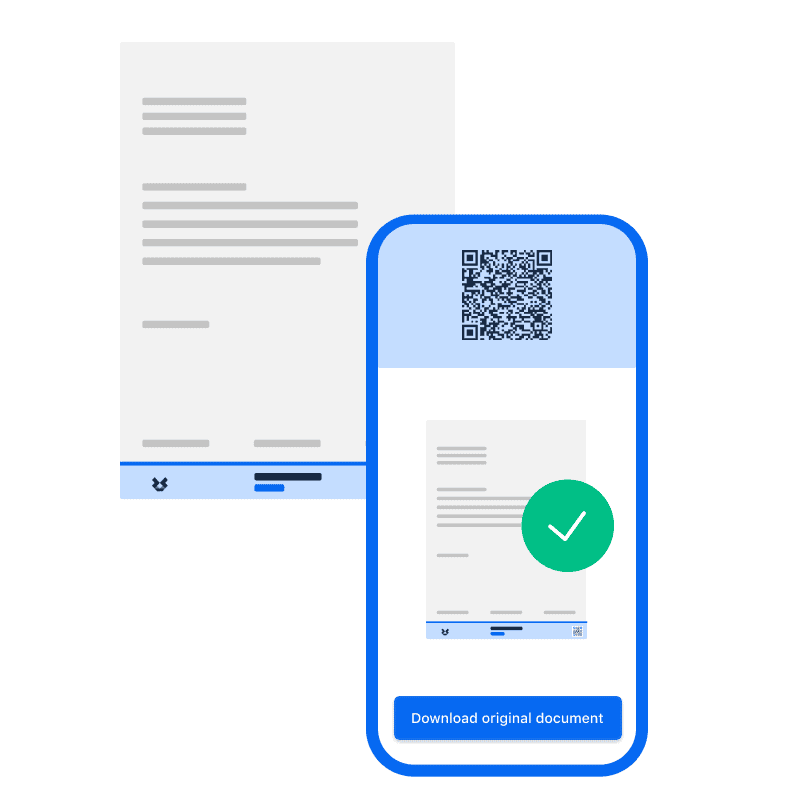
Certifaction’s Digital Twin links a printed document to its digitally signed original. Via a QR code, the digital original can be accessed and the electronic signature verified.

This makes it possible to combine digital and paper-based processes without losing the connection to the digitally signed original.

Benefits

  • Connection between the printout and the digitally signed original
  • Verification via smartphone and standard browser
  • Digital and paper-based processes can be combined
Grafische Darstellung eines Dokuments und eines Smartphones, das das Dokument mit einem QR-Code scannt und die Option zeigt, das Originaldokument herunterzuladen, mit einem grünen Häkchen zur Bestätigung.

Customer Stories

Swiss Organizations Rely on Certifaction

Certifaction is already used by many Swiss companies and organizations in regulated and privacy-sensitive industries for their digital signing processes.

E-Prescription Switzerland with HIN

On the initiative of FMH and pharmaSuisse, the E-Prescription Switzerland service was developed together with HIN. The national solution is designed for more than 30 million e-prescriptions per year.

Doctors sign using their HIN eID. Thanks to Zero Document Knowledge, neither Certifaction nor HIN can access sensitive patient data.

FAQs

Frequently Asked Questions About Certifaction as a DocuSign Alternative

Yes. Certifaction is a Swiss eSigning solution for organizations that want to combine electronic signatures with high requirements for data protection, confidentiality and digital sovereignty. The solution supports SES, AES and QES under eIDAS and ZertES. Learn more in our overview of electronic signatures in Switzerland.

A key difference lies in the positioning and technical architecture. Certifaction focuses on Privacy-First eSigning and uses Zero Document Knowledge and End-to-End Encryption. DocuSign offers a broad portfolio of contract management solutions that includes electronic signatures, among other features.

Certifaction is a Swiss company and is itself not subject to the US CLOUD Act. DocuSign is a US company and is subject to the legal framework applicable to US companies.

Yes. Certifaction supports all signature standards (SES, AES and QES) under ZertES and eIDAS.

Zero Document Knowledge means that, unlike conventional SaaS eSigning solutions, Certifaction cannot access the contents of the documents being signed. Documents are processed locally and encrypted end-to-end. As a result, confidential content remains unreadable for Certifaction.

Certifaction does not offer its own comprehensive Contract Lifecycle Management solution. Instead, it focuses on eSigning and can be integrated via API into existing contract management and specialist systems.

Certifaction’s Enterprise packages offer both flat per-user pricing and billing per signature, depending on which model best fits the specific use case.

Yes. Certifaction offers white-label and API options for organizations that want to seamlessly integrate electronic signatures into their own products and processes.

The Digital Twin links a document to its digitally signed original. When the document is printed, the digital original can be accessed and verified via a QR code. This makes it possible to connect digital and paper-based document processes.

Do you have any further questions?